
Patient no-shows are one of the most persistent challenges facing medical practices today. When patients miss their appointments without notice, it creates a ripple effect — lost revenue, wasted staff time, and disrupted schedules that affect every other patient on the calendar. Studies show that no-show rates across medical practices range from 5% to 30%, costing the healthcare industry billions of dollars each year.
The good news is that no-shows are not inevitable. With the right strategies and tools, you can dramatically reduce your no-show rate and keep your practice running smoothly. In this guide, we will walk through proven methods that medical practices of all sizes are using to get patients through the door on time.
Understanding Why Patients Miss Appointments
Before you can fix the problem, you need to understand what is driving it. Patients skip appointments for a variety of reasons, and knowing the most common ones helps you target your efforts effectively.
Forgetfulness is the number one reason patients miss appointments. Life gets busy, and an appointment booked three weeks ago can easily slip through the cracks. Transportation issues, work conflicts, and childcare challenges are also major factors, especially for patients in underserved communities.
Fear and anxiety play a larger role than many providers realize. Some patients avoid appointments because they are nervous about potential diagnoses or uncomfortable procedures. Financial concerns — worry about copays, deductibles, or unexpected charges — also keep patients away.
Finally, long wait times and poor past experiences can erode a patient's motivation to show up. If a patient sat in your waiting room for 45 minutes during their last visit, they may not feel urgency about arriving on time for the next one.
Implement Automated Appointment Reminders
Automated reminders are the single most effective tool for reducing no-shows. Research consistently shows that practices using multi-channel reminders — text, email, and phone — see no-show rates drop by 30% to 50%.
The key is timing. Send your first reminder 48 to 72 hours before the appointment, giving patients enough time to reschedule if needed. Follow up with a second reminder the morning of the appointment. Text messages tend to have the highest engagement rates, with open rates above 95%, compared to about 20% for email.
Your reminders should include the essential details: date, time, provider name, location, and a clear way to confirm or cancel. Make it as easy as possible for patients to respond — a simple "Reply C to confirm or R to reschedule" removes friction and gives you early warning about potential gaps in your schedule.
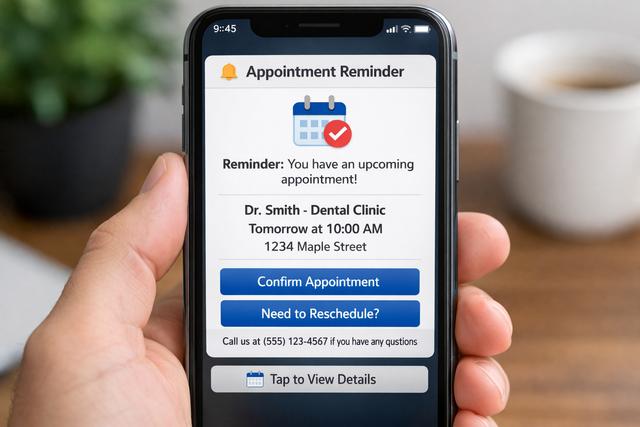
Practice management software like Doctofam's SMS reminders and WhatsApp reminders can automate this entire process, sending personalized reminders across multiple channels without your staff lifting a finger. This frees up your front desk team to focus on patients who are actually in the office.
Make Scheduling and Rescheduling Easy
The harder it is for patients to manage their appointments, the more likely they are to simply not show up. Offering online scheduling gives patients the flexibility to book, change, or cancel appointments at any time — not just during your office hours.
Self-service scheduling portals let patients pick times that genuinely work for their schedules, reducing conflicts that lead to no-shows. When a patient realizes they cannot make an appointment at 2 AM on a Sunday, they can immediately reschedule instead of putting it off and eventually forgetting.
Consider implementing a waitlist system as well. When a patient cancels, you can automatically offer that slot to the next person on the waitlist, filling gaps before they cost you money. This approach turns cancellations from a loss into a neutral event.
Establish a Clear Cancellation Policy
A well-communicated cancellation policy sets expectations and gives patients a framework for responsible behavior. Require at least 24 hours notice for cancellations, and clearly explain this policy at multiple touchpoints — during scheduling, in confirmation messages, and on signage in your office.
Some practices charge no-show fees, typically ranging from to . While this can be effective, approach it carefully. Fees can discourage no-shows among patients who simply forget, but they can also alienate patients who had genuine emergencies. Consider waiving fees for first-time offenders and reserving them for repeat no-shows.
Whatever policy you choose, consistency is critical. If patients learn that the policy is not enforced, it loses its power. Document every no-show in your practice management system and follow up with a friendly but firm communication referencing the policy.
Reduce Wait Times and Improve the Patient Experience
Patients who have positive experiences at your practice are far more likely to keep future appointments. One of the biggest drivers of patient dissatisfaction is excessive wait times. Track your average wait times and work to bring them under 15 minutes.
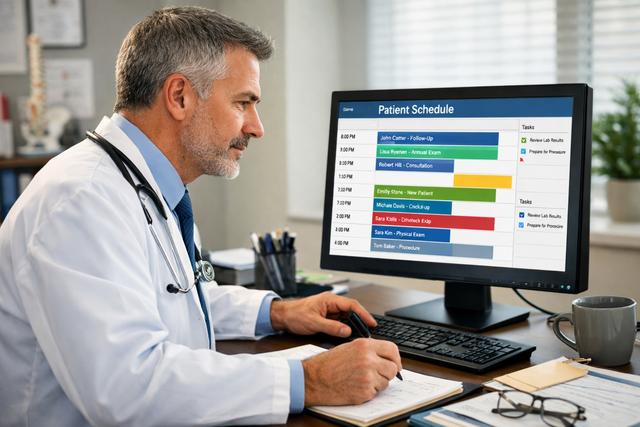
Efficient scheduling is the foundation. Avoid overbooking as a no-show hedge — it creates a vicious cycle where long waits lead to more no-shows, which leads to more overbooking. Instead, use data from your scheduling system to identify patterns. If Monday mornings have a 20% no-show rate, adjust your template accordingly.
Small touches matter too. A welcoming reception area, friendly staff, and clear communication about any delays go a long way. Send a text when you are running behind schedule so patients can adjust their arrival time rather than sitting in a waiting room growing frustrated.
Use Data to Identify At-Risk Patients
Not all patients carry the same no-show risk. Your practice management software holds valuable data that can help you predict and prevent missed appointments. Look for patterns: patients who have missed appointments before are statistically the most likely to miss again.
Other risk factors include new patients (who have no established relationship with your practice), appointments booked far in advance, and certain appointment types. By flagging high-risk appointments, you can apply extra attention — an additional reminder call, a shorter booking window, or a personal outreach from the care team.
Some modern practice management platforms use predictive analytics to automatically score appointment risk and trigger appropriate interventions. This data-driven approach lets you focus your efforts where they will have the most impact, rather than applying the same strategy to every patient.
Build Stronger Patient Relationships
Patients who feel connected to their healthcare provider are significantly less likely to miss appointments. Building rapport starts with the first interaction and continues through every touchpoint.
Train your staff to learn and use patient names. Follow up after procedures to check on recovery. Send birthday greetings or wellness tips between visits. These small gestures create a sense of personal connection that makes patients feel valued — and valued patients show up.
Consider assigning each patient a consistent point of contact on your staff. When patients know they will see a familiar face at reception, the visit feels less clinical and more personal. This consistency also helps your team build the kind of rapport that makes a quick "Hey, we missed you today" phone call feel natural rather than transactional.
Offer Telehealth as an Alternative
Sometimes patients cannot physically get to your office, but they still need care. Offering telehealth options gives patients a way to keep their appointments even when transportation, weather, or scheduling conflicts would otherwise lead to a no-show.
Telehealth is particularly effective for follow-up visits, medication management, and initial consultations. By giving patients the choice between in-person and virtual visits, you remove many of the barriers that cause no-shows while still delivering quality care.
Make sure your telehealth platform is easy to use. If patients need to download special software or navigate a complicated login process, the technology becomes its own barrier. The best telehealth solutions work right from a smartphone browser with a single click from the appointment reminder.
Putting It All Together
Reducing patient no-shows is not about any single tactic — it is about building a system that addresses the problem from multiple angles. Start with automated reminders, since they deliver the fastest and most measurable results. Then layer on easy online scheduling, a clear cancellation policy, and data-driven risk identification.
Track your no-show rate monthly and set specific targets for improvement. Use a no-show rate calculator to see your baseline and a no-show cost calculator to translate that rate into dollars. Most practices can cut their no-show rate in half within three to six months by implementing these strategies consistently. The financial impact is substantial — a practice seeing 30 patients per day with a 15% no-show rate is losing roughly 4 to 5 appointments daily. At an average visit value of , that is over ,000 in lost revenue per year.
The right practice management tools make all of this easier. Look for software that integrates automated reminders, online scheduling, waitlist management, and patient analytics into a single platform. When your systems work together, reducing no-shows becomes an automated process rather than a daily battle.
Frequently Asked Question
How can healthcare practices reduce patient no-shows?
The fastest, most measurable win is automated multi-channel appointment reminders — practices that combine text, email, and phone reminders see no-show rates drop by 30% to 50%. Layer on easy online self-scheduling, a clearly communicated cancellation policy, and data-driven identification of at-risk appointments, and most practices can cut their no-show rate in half within three to six months.
